

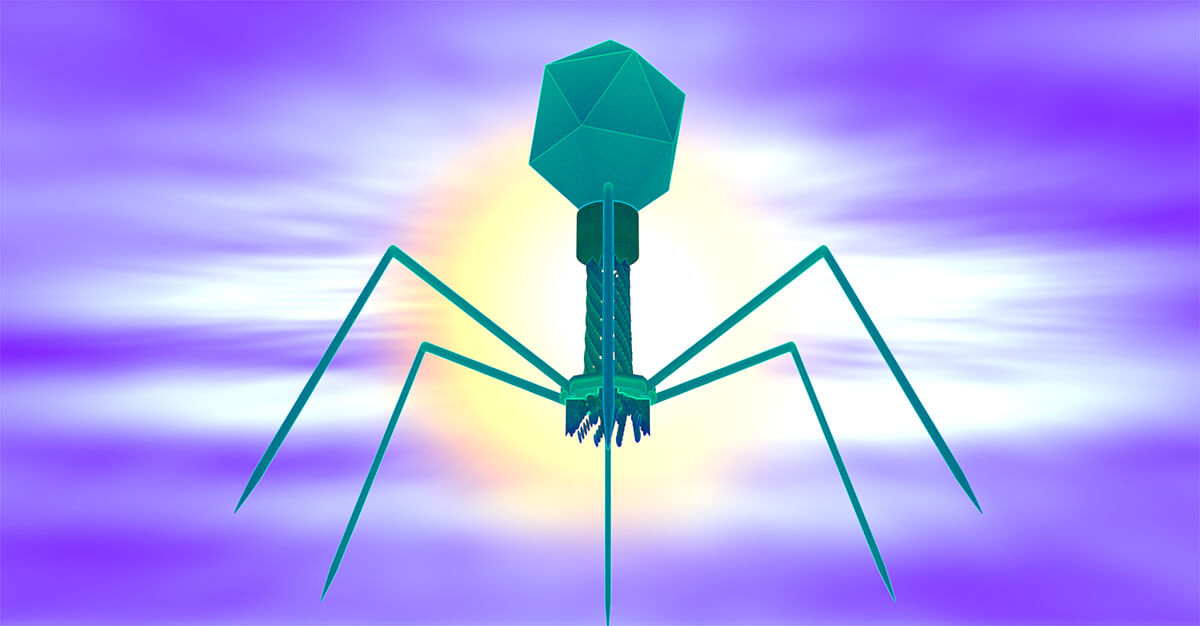
If one wanted to learn how to best kill bacteria, phages would be the first warriors to study. Phages and bacteria have fought an endless, microscopic war for billions of years. Their battle strategies may be the key to beating back bacterial strains with antimicrobial resistance (AMR).
AMR is a significant and worsening threat to public health. Millions of lives are jeopardized each year the crisis persists. Urgent intervention from governments and medical professionals can prevent tens of millions of deaths in coming decades.
Recent research published in Cell identified a unique strategy bacteria use to defend against phage attacks, called Kiwa. The study also revealed two strategies phages use to overcome Kiwa. These tactics could inform new therapies to combat bacterial strains with AMR.
How Do the Phage and Bacteria Combat Strategies Work?
Researchers pinpointed how bacteria’s Kiwa strategy responds to phage attack. Kiwa sits within bacterial cell membranes and sounds an alarm when it detects hostile phages. The study hypothesizes that Kiwa reacts when a phage grabs onto a cell to insert its DNA. Kiwa stops the phage from creating DNA building blocks that make new phages.
Meanwhile, phages can mutate the proteins that latch them onto bacterial cells. This shift makes them invisible to the Kiwa’s sensors. Phages can also generate mutations that prevent Kiwa from stopping DNA injection. The process isn’t fully understood, but it does allow phage viruses to reproduce after Kiwa activates.
Bacteria have many other protection mechanisms besides Kiwa. Further study can provide even more insight into possible therapies that target them. Eventually, the unique defenses of different strains can be identified and overcome on a case-specific basis.
What Limitations and Further Research Opportunities Did the Study Note?
The study noted a few key limitations of its findings. Both the molecules that trigger Kiwa and its activation method itself remain unknown. Future research needs to directly observe the process to gain a better understanding of Kiwa. It is also unclear exactly how Kiwa stops phages from replicating their DNA. Concrete data on these questions could shape more precise treatments for AMR strains.
The researchers of this study created the phage collection project as a basis for further exploration. The growing database is collecting information about phages in different regions. Observing the phages that defeat AMR bacteria could serve as a blueprint for future medicines. The catalog already includes over 600 phage entries and counting.
Conclusion
A recent study revealed strategies that phages and bacteria use against one another in an ancient war. Researchers found a unique bacterial defense against phages, called Kiwa. This finding, in addition to discoveries about phages’ own tactics, could shape new treatments for AMR bacterial strains.
Have an upcoming trip? Passport Health offers a wide variety of options to help keep you safe from disease, including vaccines. Call or book online to schedule your appointment today.
Logan Hamilton is a health and wellness freelance writer for hire. He’s passionate about crafting crystal-clear, captivating, and credible content that elevates brands and establishes trust. When not writing, Logan can be found hiking, sticking his nose in bizarre books, or playing drums in a local rock band. Find him at loganjameshamilton.com.
 US - English
 CA - English
 Rest of World - English


