

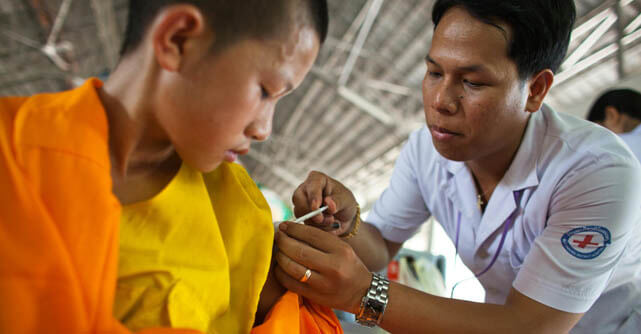
Vaccination has reduced measles deaths by 88% from 2000 to 2024. The World Health Organization (WHO) says almost 59 million lives were saved by the vaccine. Still, measles killed about 95,000 people in 2024. Most deaths occurred in children younger than five years old.
The 2024 statistic shows one of the lowest annual death totals since 2000. Yet every preventable death reflects a major global failure. This is especially tragic when a cheap and effective vaccine exists. Lower deaths also do not erase the reality of rising global measles cases.
Measles caused about 11 million infections in 2024. This number exceeds 2019 pre-pandemic records by almost 800,000 cases. The WHO’s Director-General, Dr. Tedros Adhanom Ghebreyesus, called measles the most contagious virus. He warned that any weakness in global defenses can be exploited quickly.
What Measles Trends Did the Report Find?
Global regions saw major rises in measles cases between 2019 and 2024. The Eastern Mediterranean region saw an 86% increase in that period. The European region rose by 47%, and Southeast Asia increased by 42%.
The African region saw a 40% drop in cases and a 50% fall in deaths. This good news comes from stronger vaccine coverage across African nations.
Measles is rising mostly where child mortality rates are lower. These areas benefit from better nutrition and consistent health care access. Still, infected children can suffer blindness, pneumonia, or encephalitis (brain swelling).
About 84% of children received their first measles dose in 2024. Only 76% received the required second dose, according to the WHO. The data show a slight improvement from 2023, with 2 million more immunizations. WHO guidance says 95% coverage with two doses is needed to stop transmission.
Over 30 million children lacked adequate measles protection in 2024. About 75% of these children live in the African and Eastern Mediterranean regions. Healthcare systems in these zones are more fragile and under-resourced. These gaps make it harder to maintain strong and reliable vaccine coverage.
Measles is the first disease that will return dangerously without full coverage. This warning comes from the WHO’s Immunization Agenda 2030 (IA 2030) midterm review. The report says ongoing outbreaks reveal weaknesses in global health systems. IA 2030 warns that current trends threaten efforts to eliminate measles by 2030.
In 2024, 59 countries experienced large or disruptive measles outbreaks. This number is nearly triple the number of outbreaks seen in 2021. The data also show the most outbreaks since the COVID-19 pandemic began. The Americas were the only region without at least one large outbreak in 2024.
Several countries have fought new outbreaks in 2025. Surveillance has strengthened, helping WHO and affected countries respond faster. Some nations have still managed to reach measles elimination. More than 760 laboratories in the Global Measles and Rubella Labratory Network (GMRLN) processed over 500,000 samples in 2024.
This total marks a 27% increase from 2023. Yet GMRLN has faced severe funding cuts. Immunization programs have also lost important financial support. These losses could worsen protection gaps and trigger more outbreaks.
How Can the World Achieve Measles Elimination?
More funding must support countries battling outbreaks and strengthen their partners. Increased investment is needed to close immunity gaps worldwide. Stronger commitments can help move the world toward measles elimination.
IA 2030’s goal to eliminate measles still needs major progress. By the end of 2024, only 42% of countries had eliminated measles. That total is only three more countries than before the pandemic.
Two of these nations are the first in the African region to be measles-free. The global total has now reached 96 measles-free countries. The Americas regained their measles-free status in 2024. However, that regional status was lost again in November 2025.
Measles continues returning, even in privileged countries that eliminated it. The main reason is national vaccine coverage falling below 95%. Small communities with lower vaccination rates can still fuel large outbreaks. These outbreaks then threaten safety across entire countries.
Political leaders must ensure children receive two full vaccine doses. They must also maintain strong surveillance to detect outbreaks quickly. Fast action helps eliminate new clusters before they spread widely. Strong commitment is essential to achieving global measles elimination.
Conclusion
Measles remains a major global threat despite years of strong progress. Rising outbreaks show how fragile protection becomes when vaccination rates drop. Stronger coverage and faster surveillance are essential to reach global elimination.
Have an upcoming trip? Passport Health offers a wide variety of options to help keep you safe from disease, including vaccines. Call or book online to schedule your appointment today.
Logan Hamilton is a health and wellness freelance writer for hire. He’s passionate about crafting crystal-clear, captivating, and credible content that elevates brands and establishes trust. When not writing, Logan can be found hiking, sticking his nose in bizarre books, or playing drums in a local rock band. Find him at loganjameshamilton.com.
 US - English
 CA - English
 Rest of World - English


